Case study · Automation · AI agents
Publish from my phone
I talk to my phone, approve a draft, and about two minutes later there's a post on this site. No laptop, no CMS, and no way for an agent to publish something I didn't sign off on.
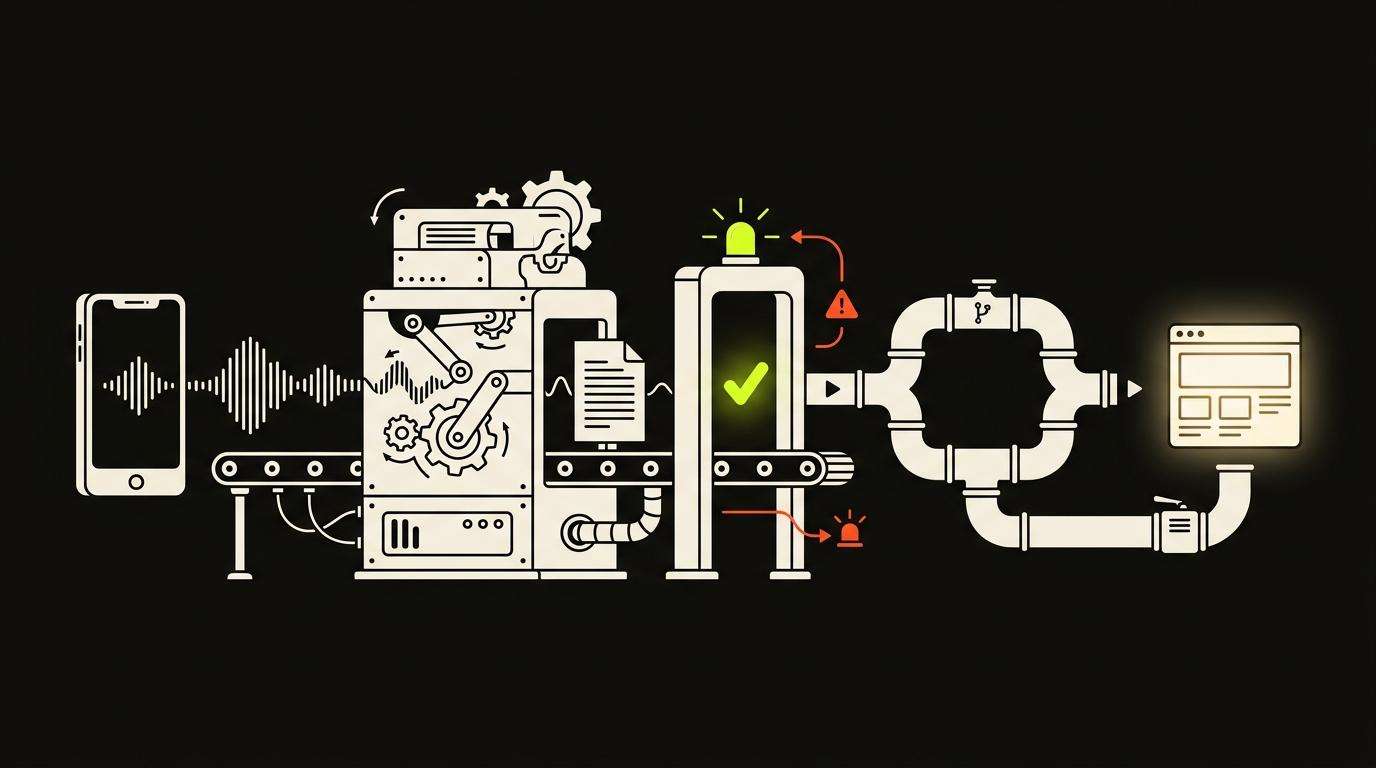
- From “publish” to live
- ~2 min
- Laptops needed
- 0
- Queued posts go live
- 9 AM ET
- Guardrails between my mouth and the internet
- 6
The pipeline
01 · Phone
Talk
I open the Claude app and ramble an idea or my week into it.
02 · Cloud Claude
Draft
A cloud session runs my publishing skill: drafts in my voice, scrubs anything confidential.
03 · Me
Approve
Nothing ships without an explicit yes. Publish now, queue it, or keep it as a draft.
04 · GitHub
Commit
The post is one Markdown file, committed to the site's repo.
05 · Actions
Deploy
A workflow fires a Vercel deploy hook, or waits for the post's scheduled morning.
06 · Vercel
Live
zerodaysoff.dev rebuilds. The post is up about two minutes after I said yes.
Why bother
I made a promise: one post a week, zero days off. The ideas show up in the car, at the gym, between meetings. By the time I'm at a laptop, most of them are gone.
So the publishing step had to fit in the gaps. The whole site is a Next.js app where every post is a single Markdown file. If an agent can write one file and commit it, it can publish. The hard part was making sure it can't publish anything it shouldn't.
Ideas don't arrive one a week either, so the pipeline also queues posts: I can dump five ideas on a Sunday and they go out on the next five Tuesdays at 9 AM, on their own.
The guardrails
It's an AI agent with write access to a public website. I treated it like one.
01
A confidentiality scrub on every draft
The skill strips internal tool names, customers, hostnames, numbers and anything that maps back to my employer, then lists what it changed so I can check it.
02
A human approval gate
The agent can draft all day, but it can't publish without an explicit yes from me. Drafts are stored hidden until I decide.
03
An allowlist on auto-publish
If a cloud session can only push to its own branch, a workflow copies the post onto main, but only when the branch touches nothing except post files. A branch that changes code is never auto-merged.
04
No tokens in the code
Deploys go through a single deploy hook stored as a GitHub secret. The site's repo holds no API keys, and the agent never sees one.
05
Nothing leaks early
Queued posts are hidden from the log, RSS, sitemap and their own URL until their date. The scoreboard shows that a week is queued, never what's in it.
06
Deploys don't depend on who committed
Production builds come from one workflow, not from whichever account authored the commit, so a phone session and my laptop ship the exact same way.
What broke
Vercel refused the phone's commits
Vercel blocks Git deploys when it can't match the commit author to a linked account, and cloud sessions commit as a different identity. I turned off Vercel's Git deploys and made GitHub Actions the only path to production.
I couldn't mint a deploy token
My Vercel CLI login wasn't allowed to create API tokens. A deploy hook turned out simpler anyway: one secret URL, no token to rotate, and Vercel does the build.
Medium closed its API
Cross-posting to Medium can't be automated for new accounts anymore. The skill now hands me Medium's import link instead, which keeps zerodaysoff.dev credited as the original.
Stack
- Claude Code (mobile + cloud)
- A custom Claude skill
- GitHub
- GitHub Actions
- Vercel deploy hooks
- Next.js 16
- Markdown